
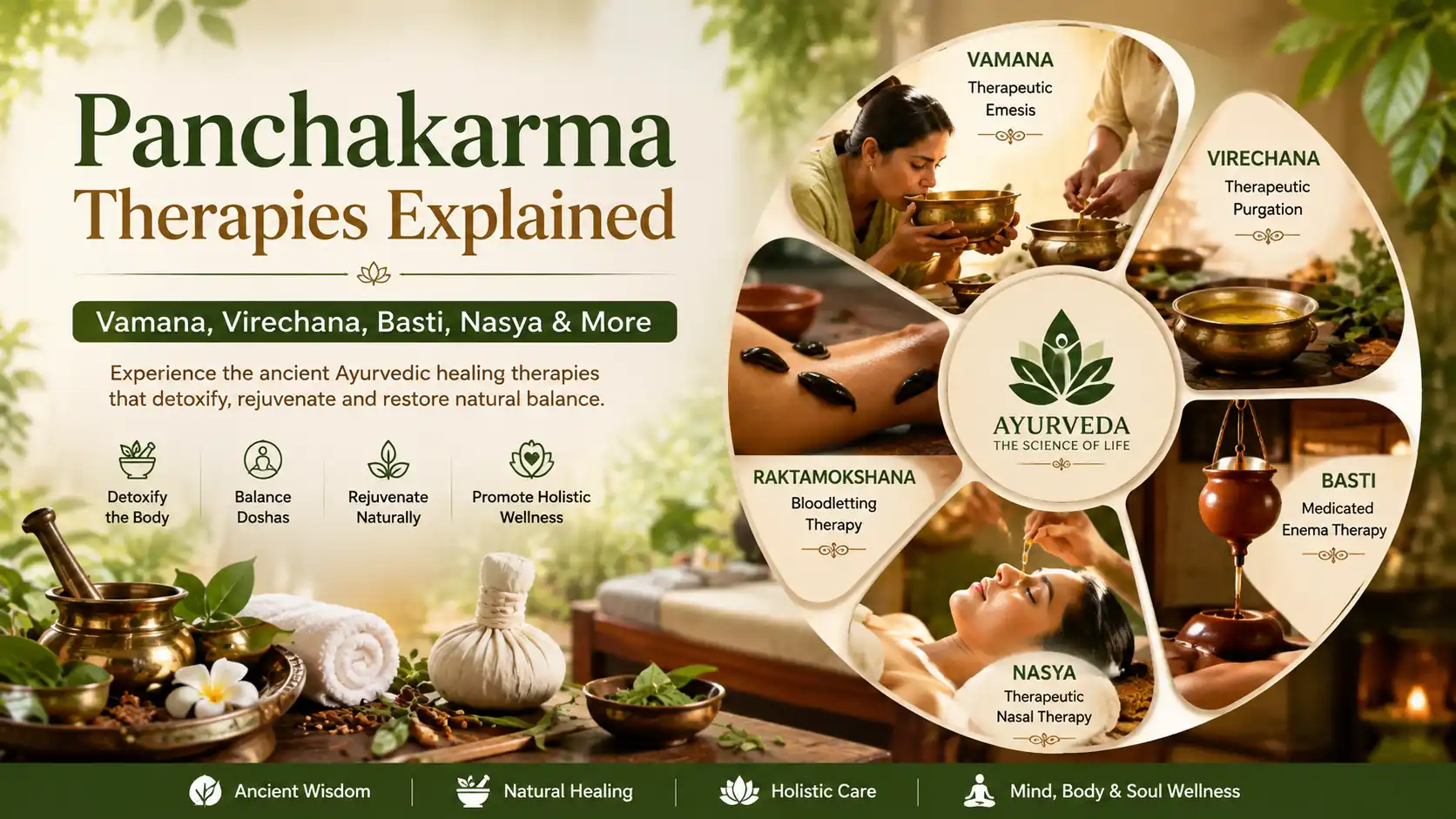
Panchakarma Therapies Explained: Vamana, Virechana, Basti, Nasya & More
Panchakarma is one of the best-known therapeutic approaches in Ayurveda. If you are researching Panchakarma treatment in Goa, understanding the different therapies involved can help you make a more informed decision when choosing an Ayurvedic centre.
The word Panchakarma refers to a group of five major Ayurvedic therapeutic procedures. Depending on the Ayurvedic tradition and clinical approach, these include Vamana, Virechana, Basti, Nasya and Raktamokshana. The Central Ayurveda Research Institute and other Indian government Ayurveda institutions describe these procedures as specialized therapies that require appropriate assessment, preparation and supervision.
Importantly, Panchakarma is not a one-size-fits-all treatment. A qualified Ayurvedic practitioner determines which procedures are appropriate based on the individual’s condition, constitution and treatment requirements.
What Is Panchakarma?
Panchakarma is traditionally described in Ayurveda as a five-fold therapeutic approach. The five procedures are used within an individualized treatment plan and are generally preceded by preparatory therapies and followed by a suitable post-treatment regimen.
The five commonly described procedures are:
- Vamana – therapeutic emesis
- Virechana – therapeutic purgation
- Basti – medicated enema therapies
- Nasya – therapeutic nasal administration
- Raktamokshana – traditional bloodletting
Different Ayurvedic schools may classify the fifth procedure differently, and Basti itself includes different therapeutic forms.
A Panchakarma program may also involve preparatory procedures such as Snehana and Swedana, followed by dietary and lifestyle guidance during the recovery phase.
The Five Panchakarma Therapies Explained
1. Vamana – Therapeutic Emesis
Vamana is a medically supervised therapeutic emesis procedure used within specific Ayurvedic treatment plans.
In traditional Ayurveda, Vamana is primarily associated with addressing aggravated Kapha and is performed only when considered appropriate by a qualified practitioner.
Vamana is not simply induced vomiting or a general detox procedure. It requires appropriate preparation, supervision, selection of medicines and post-treatment care.
Because it is an intensive therapeutic procedure, it should only be undertaken after an Ayurvedic assessment confirms that it is suitable for the individual.
2. Virechana – Therapeutic Purgation
Virechana is a therapeutic purgation procedure that forms another important part of Panchakarma.
According to Ayusoft, an Ayurveda knowledge resource associated with the Ministry of AYUSH, Virechana is traditionally associated primarily with aggravated Pitta.
A properly planned Virechana program may involve preparation before the procedure and specific dietary and lifestyle recommendations afterward.
The Government Ayurveda College in Kerala also emphasizes preparation, administration, observation and post-Virechana management as important components of the procedure.
3. Basti – Medicated Enema Therapy
Basti is an important Panchakarma therapy involving the administration of medicated preparations through the rectal route.
Traditional Ayurvedic practice includes different forms of Basti, including Niruha Basti and Anuvasana Basti. The National Institute of Ayurveda describes these as distinct therapeutic approaches within Panchakarma.
The selection of Basti type, preparation, timing and administration depends on the individual treatment plan.
Because Basti is a specialized therapeutic procedure, it should be administered by trained practitioners under appropriate supervision.
4. Nasya – Therapeutic Nasal Administration
Nasya involves administering an Ayurvedic medicinal preparation through the nasal route.
Traditional Ayurvedic sources associate Nasya particularly with conditions involving the region above the clavicle and with specific Dosha-related treatment approaches.
Nasya may involve different types of preparations depending on the treatment plan. The practitioner determines the appropriate medicine, method and duration.
It is therefore important not to assume that every Nasya treatment is the same.
5. Raktamokshana – Traditional Bloodletting
Raktamokshana is traditionally described as the fifth Panchakarma procedure in some Ayurvedic classifications.
It refers to traditional bloodletting procedures and is not routinely included in every Panchakarma program.
The Central Ayurveda Research Institute notes that different Ayurvedic schools classify the five procedures somewhat differently, with some traditions treating the two forms of Basti together and another school mentioning Raktamokshana as the fifth procedure.
This is one reason why it is important to discuss the treatment plan directly with a qualified Ayurvedic practitioner rather than assuming that every Panchakarma program includes all five procedures.
Preparatory Therapies Before Panchakarma
Panchakarma generally involves more than the main procedures.
Before selected Panchakarma therapies, traditional Ayurvedic practice may use preparatory procedures known as Purvakarma.
Two commonly described preparatory approaches are:
Snehana
Snehana involves the use of medicated oils or fats, internally or externally, according to the treatment plan.
Swedana
Swedana refers to therapeutic sweating or sudation procedures.
The Central Ayurveda Research Institute describes Snehana and Svedana as important preparatory measures before Panchakarma, followed by a restorative regimen known as Samsarjana Karma.
These preparatory stages help make Panchakarma a structured treatment process rather than simply a collection of individual therapies.
What Happens After Panchakarma?
Post-treatment care is also an important part of a traditional Panchakarma program.
Ayurvedic practitioners may recommend:
- A gradual return to regular food
- Specific dietary recommendations
- Adequate rest
- Lifestyle guidance
- Avoidance of certain activities for a period
- Follow-up consultation where appropriate
The post-treatment dietary and lifestyle regimen can vary according to the procedure performed and the individual’s treatment plan.
Is Every Panchakarma Therapy Suitable for Everyone?
No.
This is one of the most important points to understand before choosing a Panchakarma treatment centre in Goa.
Panchakarma procedures have specific indications, contraindications and preparation requirements. Government Ayurveda institutions provide dedicated training on indications, contraindications, preparation, administration and management of these procedures.
A qualified Ayurvedic practitioner should therefore evaluate the individual before recommending intensive Panchakarma procedures.
You should not choose a treatment simply because it is advertised as a popular detox package.
How to Choose the Best Panchakarma Treatment in Goa
If you are searching for the best Panchakarma treatment in Goa, consider more than the location or price of the treatment package.
Look for Qualified Ayurvedic Practitioners
A professional Ayurvedic consultation should be part of the treatment process.
Choose Personalized Treatment
The appropriate Panchakarma therapies should be selected according to the individual’s needs rather than providing the same procedure to every guest.
Ask About Preparation and Aftercare
A structured program should explain what happens before, during and after the main Panchakarma procedures.
Check Therapist Experience
Panchakarma procedures require appropriate knowledge and practical experience. The Kerala Department of Indian Systems of Medicine notes that Panchakarma procedures require both textual knowledge and practical skill.
Consider Hygiene and Treatment Facilities
Clean treatment rooms, appropriate equipment and a comfortable environment are important when choosing an Ayurvedic centre.
Understand What the Package Includes
Before booking, ask whether consultation, preparation, therapies, accommodation, meals, medicines and follow-up support are included in the package.
Why Choose Panchakarma Treatment in Goa?
Goa has become an attractive destination for people looking to combine Ayurveda and wellness with a peaceful travel environment.
For visitors searching for Panchakarma treatment in Goa, choosing a centre that combines traditional Ayurvedic principles with professional supervision and personalized care is more important than simply selecting a treatment based on its location.
A well-planned Panchakarma experience can include consultation, preparation, selected therapies, appropriate food, rest and post-treatment guidance.
Panchakarma Therapies at an Ayurvedic Retreat in Goa
An Ayurvedic retreat can provide an environment where guests can focus on their treatment program away from their usual daily routine.
Depending on the centre and individual treatment plan, an Ayurvedic Panchakarma program may include:
- Ayurvedic consultation
- Personalized Panchakarma therapies
- Abhyanga
- Swedana
- Herbal therapies
- Ayurvedic diet
- Yoga and relaxation practices
- Lifestyle guidance
- Post-treatment care
However, supporting therapies such as Abhyanga or Swedana should not be confused with the five principal Panchakarma procedures. Government Ayurveda sources distinguish preparatory and allied procedures from the main Panchakarma therapies.
Experience Traditional Panchakarma in Goa
Understanding the different Panchakarma therapies is an important first step when choosing an Ayurvedic treatment program.
Vamana, Virechana, Basti, Nasya and Raktamokshana each have distinct roles within traditional Ayurveda, and not every procedure is appropriate for every individual.
If you are looking for the best Panchakarma treatment in Goa, choose an Ayurvedic centre that emphasizes qualified consultation, personalized treatment planning, experienced therapists, appropriate preparation and post-treatment care.
At Brothers Ayurveda Retreat, visitors can explore traditional Ayurvedic wellness programs in a peaceful retreat environment with treatment plans designed according to individual requirements.
Interested in Panchakarma treatment in Goa? Contact us to learn more about our Ayurvedic Panchakarma programs and schedule a consultation.